Pages

Showing posts with label pray. Show all posts

Saturday, January 2, 2016

Epiphany: Rethink change and awaken love and joy


1. January 6 is observed as a church festival in commemoration of the coming of the Magi as the first manifestation of Christ to the Gentiles 
2. an appearance or manifestation especially of a divine being
3. a usually sudden manifestation or perception or an illuminating discovery, realization, or disclosure

Whether we think about the Wise Men and the Epiphany they experienced through the star and their toilsome journey and their years of research and seeking…
Or we identify Zechariah who had nine months to rethink his Epiphany from the angel about having a son…
Or consider the Epiphanies experienced by Mary or Joseph or the shepherds, some of whom had multiple encounters with angels or dreams or Holy Spirit… 
We find that sudden revelation from God caused an awakening and brought a paradigm shift - a new worldview, a new hierarchy of values. Everything changed in their lives and in their responses to what was happening because now they were aware that God had caused the awakening in their minds and hearts, and He not only loved them but had special purpose for them.

Did you experience any Epiphanies in your thinking this Advent and Christmas?
Did you have the joy of helping someone else awaken more to God’s love and joy?

God awakened his love in the wise men through their study of nature. To others he used dreams, angels, and His Holy Spirit. 
Rethink how God stirs people in different ways to become open to the power of the gospel.

Take a 21 day challenge to pray and ask someone what they are thinking about the world or God or life etc… and see where God is at work everyday.’
See if serving or sharing with them, or having a cup of coffee or meal or activity together may lead to them seeking and having an awakening.
For six weeks pray about how God wants to change the rhythms in your daily and weekly grind to include someone as a possible disciple.
It takes 40 days/six weeks to change behavior because of "Limbic lag” but only 21 days to exchange a new habit for an old one.

-PD

Saturday, August 15, 2015

Time to walk not just talk.


Thank you again for being who you are as a committed family.
Here are things I want us to pray over and talk together about:

Our next meetings is in two weeks. It will not be sharing like we did Wednesday night. Richard and I will begin equipping and directing in how to walk out what God is saying to us, so let’s seek God morning, noon and night; let's watch for how He and with whom He wants to involve us with this week.


“Take aways” from the small groups sharing 8.12.15
1. Core Convictions (non-negotiables)
2. How will we express them.
3. What do we need to walk out the revelation God is calling us to do

Convictions/values and how we walk them out
We are a family committed to growing and going in the love of God. 
We walk out our covenant relationship with God and the body of Christ by practicing morning and evening prayer, meditation in the Scripture for how to think and live, intentionally blessing and involving our lives with others to be and make disciples, tithing, participation in a small group, every member serving, honoring spiritual authority and one another, and by refusing gossip,
What do we need to walk out our covenant?
We need both small groups and all together gatherings. We need a place to gather that expresses us being a family that welcomes and serves others. We need equipped to minister to others and be good stewards of God’s creation. We need special events and celebrations. We need the power of the Holy Spirit. We need Christ our peace, our unity and his grace to be joyful for a change.


Grace and peace to you in the love of God

-PD


Thursday, July 9, 2015

Pray the Jesus Prayer so that breath becomes Life centered in Him


God be merciful to me a sinner; Jesus, Son of David, have mercy on me. (Luke 18:13, 38; (see also Matthew 20:30).

Blind men, lepers and sinners cried out to God for the mercies of forgiveness and healing. They recognized Jesus as Messiah, the Anointed King, Son of David. Their faith revealed Him and received Him as the Son of God. Their simple prayer was of faith that “made them well.”
From earliest times the church has prayed the simple Jesus prayer, as easily as breathing in and out, in a short or longer form: “Lord, Jesus Christ, Son of God, have mercy on me a sinner. Visit and heal my infirmities for your name’s sake.”

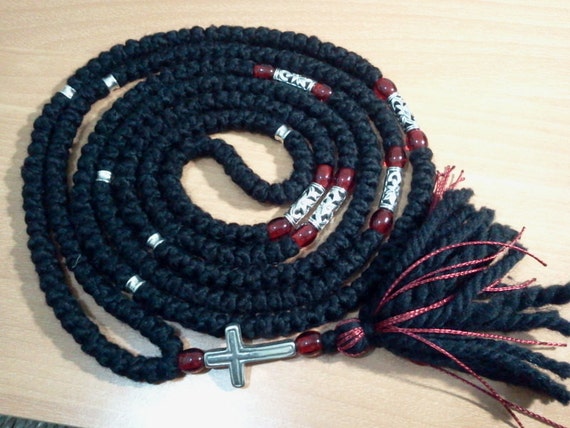
(The following is excerpted and edited from John Michael Talbot’s, The Ancient Path. He describes a way to “pray without ceasing.” I use a simple cross and beads to help me in the night, while driving, while sitting in a meeting, or watching a movie, etc. This practice helps me meditate on Him, intercede for others and overcome anxiety. If interested in beads or a cross ask me.)

The Desert Fathers had encouraged the use of aspirations, and Augustine had counseled a busy widow in his parish to imitate the Egyptian hermits in this way. Nor was devotion to the name of Jesus anything new. Saint Paul had long before told the Philippians: “at the name of Jesus every knee should bow, in heaven and on earth and under the earth” (2:10). And the pages of the Acts of the Apostles are replete with the primitive Church’s devotion to the holy name (see, for example, 2:38, 3:6, 4:10, 8:12, 9:27, etc.). From the first generation, the Church had prescribed Jesus’s name for the expulsion of demons, the healing of ailments, and the correction of error.

A way to pray without ceasing in our busy lives
If our goal is to make Jesus the single focal point of life, and to make our prayer to him as constant as breath try this: 

Breathe in: Lord.
Breathe out: Jesus.

It’s not mechanical. It’s not magical. It’s love. People do heroic things for love. They give up drinking or drugs or gambling, but the way they overcome is by keeping their beloved in mind when faced with temptation. So they’re faced with a stark choice between the loved one or the vice. If our prayer is Jesus, we will have him always before us. We will have the habit of preferring nothing to him. And, like the apostles, we can do all things in him who strengthens us (Philippians 4:13) and in his holy name.

The Jesus prayer became a compact creed: “Lord Jesus Christ, Son of God, have mercy on me, a sinner.” That simple formula includes elements of adoration, contrition, and supplication. It confesses Jesus’s divinity and our own sinfulness. It’s as hard as diamond, but it rises lightly as breath. It has sustained the inner life of ascetics and ordinary folk in the Eastern churches for well over a millennium…

300 knots of prayer
Eastern Christians sometimes pray the Jesus Prayer while they count the recitations on a string of beads or knots. Pastor Dennis Cole wears an elastic band of beads around his wrist to help him pray. I was showing my little string of beads to Bob Johnson, my spiritual director, and he agreed with how helpful it is, then he opened his desk and pulled out a string with 300 knots in it. It was a good reminder to me that I am a novice in prayer and not a spiritual giant.

How can we pray when there’s so much else we have to get done?
The Eastern Fathers offered a way to approach the problem. We can key our prayer to our every breath. The Eastern (Orthodox) Fathers tell us to invoke the name and person of Jesus with every breath we take. Think about it: breathing is the one thing we do without ceasing. If we’re living, we’re breathing. When we stop breathing, we’re dead.

I am learning to “ask for His grace to pray with His effect in me
I try to begin prayer times by asking God’s grace to help me pray and that my prayer have a good effect in me. I ask the grace to know Jesus, love Him and bring him glory to him in prayer and through the day. It is humbling to admit that I need supernatural and present assistance to praise, worship, pray and read the Scripture into my mind and heart. Paul wrote that prayer is a work of the Spirit (Rom 8:26-27). Prayer is not something we could do on our own. God is transcendent. He is wholly “other” from us. But he gives us his Spirit to pray within us, so we can say with Jesus, “Abba! Father!” (Rom 8:14; Gal 4:6).
In both Hebrew and Greek, the word for “breath” and “Spirit” is one and the same—in Hebrew, ruah; in Greek, pneuma. Prayer is possible because we have the breath of God. The Fathers tell us to unite every breath to God.

Preparing a room for God or for sin
John Michael Talbot learned that he could not keep parts of life “purely for himself, apart from God. If I did that, I was preparing a room for sin. If I could pray from the heart, if I could pray with every breath, I would leave myself no opportunity to build a reservation for self and sin. I would sooner stop breathing. I would sooner die.”



Thursday, April 16, 2015

Desire Much, Pray Much, but Demand Nothing


"Sometimes I get what I think want then it turns out I don't want it." (The pleasure in sin for a while-Hebrews 11:25)
"Sometimes I work hard to stop doing what is wrong and that I don't want to do, but I don't get what I really want." (see Romans 7).

We usually don't willfully break God's outward commands, which is good but that doesn't mean we have recognized and dealt with sin in our hearts.  (Matt 23:26 "first clean the inside of the cup.")

Both obvious and subtle relational sins violate God's command to love. What does loving our neighbor look like? (See Mt 23:23 neglecting justice, mercy and faithfulness).

The "common people” heard Jesus gladly, and He was called "friend of sinners." He ate with tax collectors and spoke with adulteresses and allowed a prostitute to touch him. He set us an example by not protecting himself from death and dishonor let alone inconvenience. "He was acquainted with sorrow." "He set us an example how to suffer."

Self-protection is a sin when our legitimate thirst for receiving love and feeling valued creates a demand to not be hurt that overrides a commitment to lovingly involve ourselves with others.

Our demand to avoid pain is a set up for offense and can lead to even more unhealthy patterns of withdrawal or manipulation. This isolation can lead to outward sins as we seek to satisfy our thirst or numb the pain.

Where are the answers? Are solutions "out there somewhere" or do we need to face our fears and wounds and sins and demands and unmet expectations and take all to Jesus? When we come to Him at the cross we find our sins and pain are in his wounds. When we risk being vulnerable with trusted friends about how we feel and what we need or even want, then we open a door into the grace and mercy and faithfulness of God's love. We can do that for one another - be a safe place. And by becoming more real (like the Velveteen Rabbit in the children's story) we will feel more pain but also more love. We will become more loving and less self-protective.

Perhaps a good place to begin is to trust Jesus more and repent of my frustrating expectations on others and myself-maybe even of God. Then I won't have so many demands of avoiding pain from others, and God.

Job was a good and righteous man but he did have a "demanding spirit" (Job 23:4-7). Later on Job faced God and realized his demanding spirit was rooted in self-justification instead of humble faith and trust in God (Job 40:8).

Maybe a good mantra would be, "Desire much, pray much, but demand nothing." (Job 42:3, 5-6)

(For more insights read Larry Crabb's book Real Change is Possible if you're willing to start from the Inside Out.)


Dwight